18+ Years Rich Experience In Gas Purification Equipment

- All
- Product Name
- Product Keyword
- Product Model
- Product Summary
- Product Description
- Multi Field Search
Views: 985 Author: Jalier Publish Time: 2025-11-10 Origin: jalier


Reflow soldering nitrogen generatorsare indispensable auxiliary equipment in modern high-end electronics manufacturing, including electronics, communications, automotive electronics, aerospace, semiconductors, and photovoltaics. Their application directly impacts product precision, reliability, and production costs. As electronic components become increasingly miniaturized and integrated, demands for soldering quality continue to rise. Therefore, selecting appropriate parameters for reflow soldering nitrogen generators not only impacts soldering quality but also directly affects production costs and equipment lifespan. This article systematically introduces the key parameter selection methods for Jiaye Purification's reflow soldering nitrogen generators based on practical applications.
I. Nitrogen Purity Requirements
Nitrogen purity is the primary parameter to consider when selecting a reflow soldering nitrogen generator. Conventional SMT production lines typically require nitrogen purity between 99.9% and 99.95%. However, precision component soldering demands higher purity, generally exceeding 99.99%. Special process requirements may necessitate adjustments based on solder paste characteristics, with some lead-free pastes demanding ultra-high purity exceeding 99.995%. These purity standards directly impact soldering quality and product reliability, requiring precise selection of the nitrogen generator according to specific production process demands.
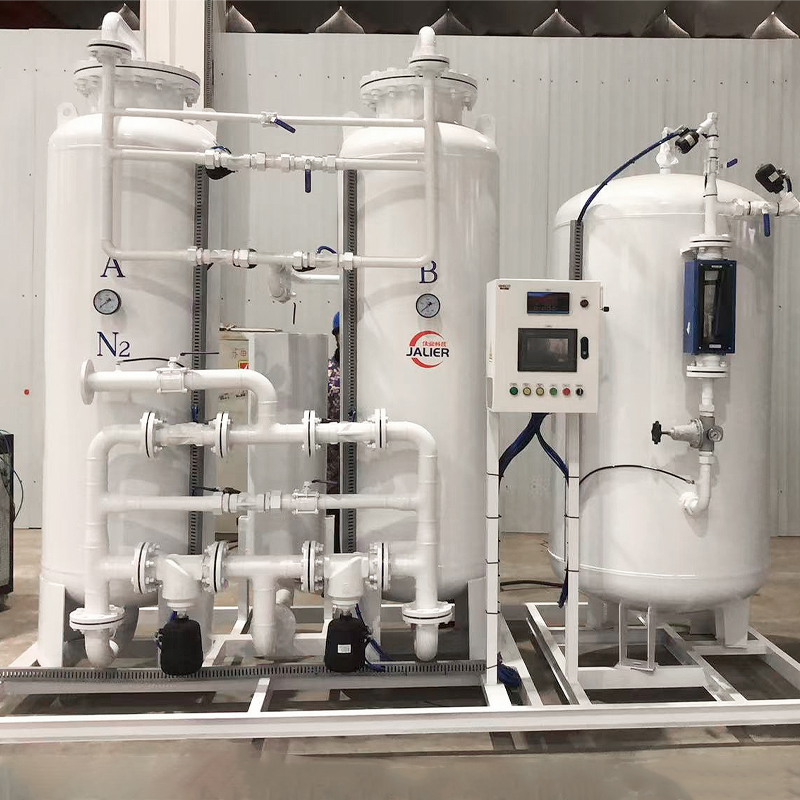
II. Nitrogen Production Capacity Requirements
When selecting the nitrogen production capacity of a reflow soldering nitrogen generator, the core principle is to ensure its rated capacity fully covers the total consumption of all gas-consuming equipment (such as reflow ovens, wave soldering machines, etc.) under peak operating conditions, while adding a 15%-30% safety margin. Specifically, confirm the maximum nitrogen flow rate (in Nm³/h) for each piece of equipment per its manual. Sum all flow rates, multiply by the safety factor, and the resulting figure represents the target output capacity for the nitrogen generator. For example, if the total equipment demand is 75 Nm³/h, a model with an output of approximately 90-100 Nm³/h is recommended. Concurrently, ensure compatibility between nitrogen purity and supply pressure.
III. Nitrogen Pressure Requirements
The operating pressure setting for reflow soldering nitrogen generators also requires careful planning. The standard operating pressure range is typically 0.6-0.8 MPa, with pressure stability requiring fluctuations controlled within ±0.05 MPa. When setting the pressure, it is essential to ensure the generator's outlet pressure consistently exceeds the minimum operating pressure required at the reflow soldering equipment inlet. This accounts for pipeline pressure loss and ensures stable operation of the gas supply system.
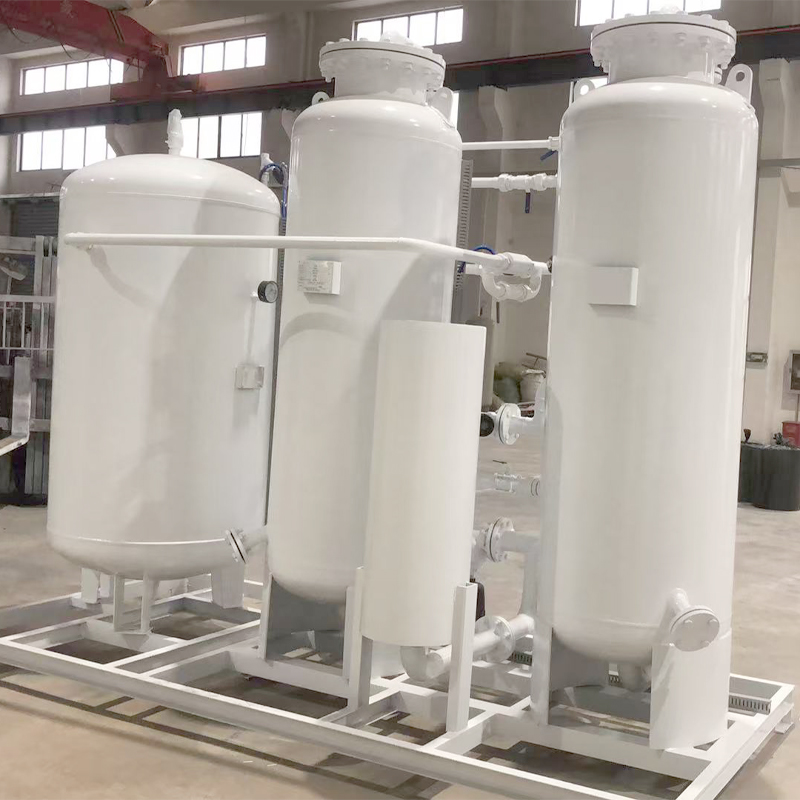
IV. Nitrogen Dew Point Requirements
Dew point temperature control is another critical parameter for reflow soldering nitrogen generators. Standard specifications require dew points below -40°C, while high-demand scenarios may necessitate lower dew points of -60°C to -70°C. However, excessively low dew points significantly increase energy consumption costs. Therefore, practical applications must strike an optimal balance between cost and performance.
Selecting parameters for reflow soldering nitrogen generators is a systematic engineering task requiring comprehensive consideration of technical approaches, production demands, and safety standards. Whether opting for dual-tower configurations or membrane separation models, modular flexible setups or explosion-proof safety designs, users should base their choices on actual production processes while integrating capacity, purity, spatial constraints, and safety requirements to select the most suitable solution. Leveraging years of expertise in the specialty gas industry, Jiaye Purification provides customized selection support and comprehensive technical services to help enterprises achieve high-quality, low-cost nitrogen-shielded soldering processes.

