18+ Years Rich Experience In Gas Purification Equipment

- All
- Product Name
- Product Keyword
- Product Model
- Product Summary
- Product Description
- Multi Field Search
Views: 985 Author: Jalier Publish Time: 2025-11-10 Origin: jalier


When customizing a suitable high-purity nitrogen generator, price alone is insufficient—multiple factors must be considered. Comprehensive evaluation across dimensions such as technology, service, and manufacturer capabilities is essential. Nitrogen generators find applications across diverse industries including, but not limited to, chemical, electronics, semiconductor, automotive repair, photovoltaic, pharmaceutical, food, and aerospace. Jiaye Purification considers all relevant factors to help you make an informed decision.
Below are core selection factors to help you outline your requirements:
I. Define Core Technical Parameters
This is the starting point for customization, determining the machine's basic model and capacity.
1. Nitrogen Purity:
Target purity: Do you require 99.9%, 99.99%, 99.999%, or 99.9995%? Different purities directly impact technology selection and cost.
2. Nitrogen Flow Rate and Pressure:
Maximum/Average Flow Rate: How many standard cubic meters per hour (Nm³/h) of nitrogen are required? This is the core determinant of equipment scale.
Outlet Pressure: At what pressure (e.g., 0.6MPa, 0.8MPa, 1.0MPa) must nitrogen be delivered to the point of use?
3. Nitrogen Quality (Key Metrics):
Dew Point: What dryness level is required? Examples include atmospheric dew point ≤ -40°C, -60°C, or -70°C.
Residual Oxygen Content: Aligns with your purity requirements, such as 1ppm, 3ppm, 10ppm, etc.
Special Impurity Requirements: For electronics, photovoltaics, pharmaceuticals, food, and similar industries, specific limits may be required for oil content, particulate matter, total hydrocarbons (THC), CO/CO₂, etc.
4. Application Scenarios and Industry Standards:
End Use: Is it for laser cutting, chemical synthesis, food packaging, electronic component manufacturing, or pharmaceutical filling? Different applications have distinct priorities.
Industry Certifications: Must it comply with specific industry standards? Examples include GMP/FDA certification for food and pharmaceuticals, or SEMI standards for electronics.
5. Installation Environment and Utilities:
Power Supply: Available voltage (e.g., 380V) and power capacity at the site.
Air Supply: Is a compressed air source readily available? What are its pressure, flow rate, and quality specifications? (Is there a preferred compressor brand?)
Space: Dimensions of the installation area, ventilation conditions, and load-bearing capacity.
Environment: Ambient temperature and humidity range. Presence of corrosive gases or dust.
II. Configuration Selection
This impacts equipment performance, lifespan, and operating costs.
1. Nitrogen Generation Process
Pressure Swing Adsorption (PSA): The current dominant technology. Mature, relatively low energy consumption, and easy maintenance. Core quality depends on the carbon molecular sieve (CMS).
Membrane Separation: More compact with no moving parts. However, for small units, energy consumption may exceed PSA at equivalent purity levels, and it demands extremely high inlet gas quality. Considerable for specific low-flow applications.
2. Customizable Configuration:
Flexibly select core component brands and grades based on budget and usage requirements. Adjustable elements include air compressors, refrigerated dryers, valves, and control systems—ensuring critical quality while controlling overall costs.
3. Energy Efficiency and Operating Costs
The largest operating cost is electricity, primarily from the air compressor. Therefore, the nitrogen generator's energy consumption per unit (i.e., electricity consumed per cubic meter of nitrogen produced) is a critical comparison metric.
Custom equipment can maximize carbon molecular sieve utilization by precisely calculating adsorption tower dimensions and switching cycles, reducing compressed air consumption and directly lowering electricity costs—the largest expense over the nitrogen generator's lifecycle. Selecting high-efficiency air compressors and dryers may involve slightly higher initial investment but delivers substantial long-term energy savings.
III. Installation Structure Design
1. Equipment Dimensions and Layout
Confirm the installation space (length, width, height) within the facility to ensure smooth equipment placement and sufficient operational/maintenance clearance. Considering noise and heat dissipation, nitrogen generators (especially their air compressors) should be positioned in well-ventilated areas.
2. Flexible Structural Layout:
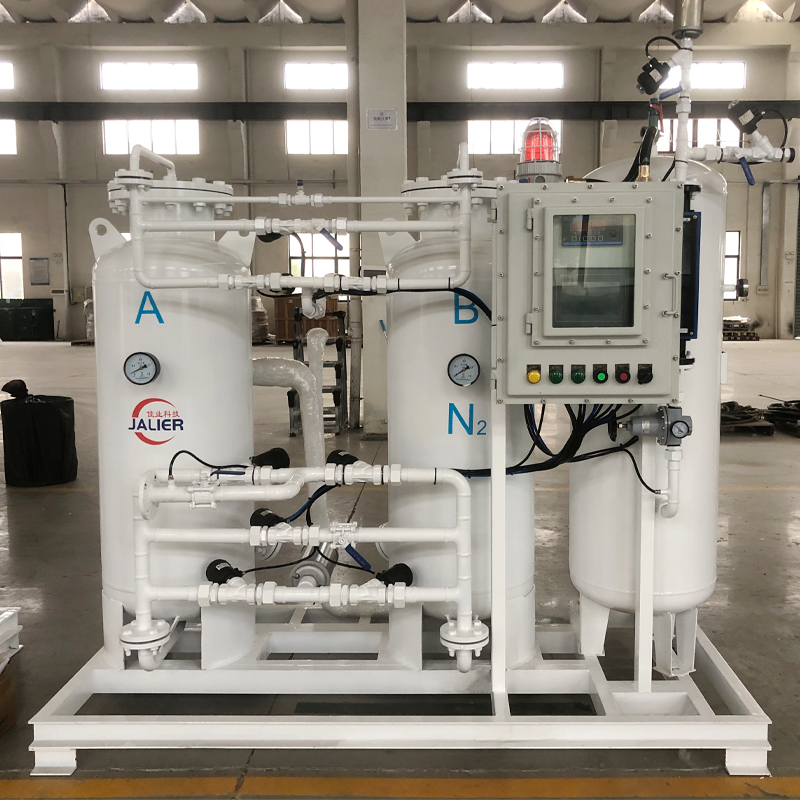
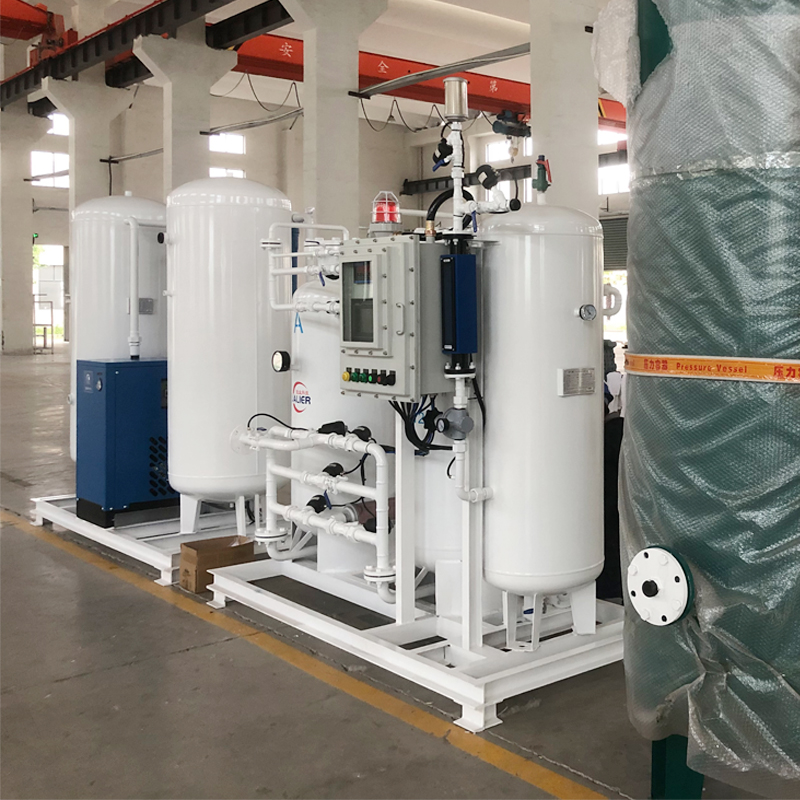
Compact nitrogen generators are typically used in laboratories, small production lines, or space-constrained environments. Customization optimizes overall structure—such as designing integrated skid-mounted, mobile, cabinet-style, or modular configurations (separating air compressors, purifiers, and nitrogen generators)—to fit specific installation spaces, achieving a “tailored solution.”
3. Customized Interfaces and Orientation:
The positions and orientations of gas inlets/outlets and power interfaces can be adjusted according to on-site piping layouts. This minimizes modification work during installation, ensuring greater convenience and aesthetic appeal.
IV. Functional Expansion and Integration Level
Integrate Additional Functions: Customize with modules not included in standard models based on process requirements, such as:
- Nitrogen Purity Online Analyzer: Real-time monitoring and display of nitrogen purity.
- Flow Meters and Cumulative Flow Meters: Precise tracking of nitrogen consumption.
- Nitrogen Storage Buffer Tank: Balances usage fluctuations and stabilizes system pressure.
Remote Monitoring Interface: Reserved RS485, Ethernet, or similar interfaces for seamless integration into factory IoT systems, enabling remote control and data acquisition.
V. Supplier Evaluation
Technical Team: Does the supplier have experienced engineers to provide technical support and solution design?
Case Experience: Are there successful case studies in your industry or similar operating conditions?
Response Speed: Can the supplier respond quickly when issues arise?
Spare Parts Supply: Are common spare parts stocked?
Technical Training: Is operational and maintenance training provided?
Warranty Policy: What is the warranty period for the entire unit and core components?
By following these systematic steps, you can clearly guide the customization process of your high-purity nitrogen generator, ultimately obtaining a “tailor-made” unit that delivers outstanding performance, reliable stability, and fully meets your production requirements.

