18+ Years Rich Experience In Gas Purification Equipment

- All
- Product Name
- Product Keyword
- Product Model
- Product Summary
- Product Description
- Multi Field Search
Views: 985 Author: Jalier Publish Time: 2025-11-04 Origin: jalier


PSA stands for Pressure Swing Adsorption. The core principle of high-purity PSA nitrogen generators is to utilize the characteristic that carbon molecular sieves have different adsorption rates for oxygen and nitrogen in air. Through a cyclic process of pressure adsorption and pressure reduction desorption, nitrogen is separated from the air. Below, Jiaye Purification provides a brief introduction to the working principle of PSA nitrogen generators.
I. Compressed Air
1. Air Intake:
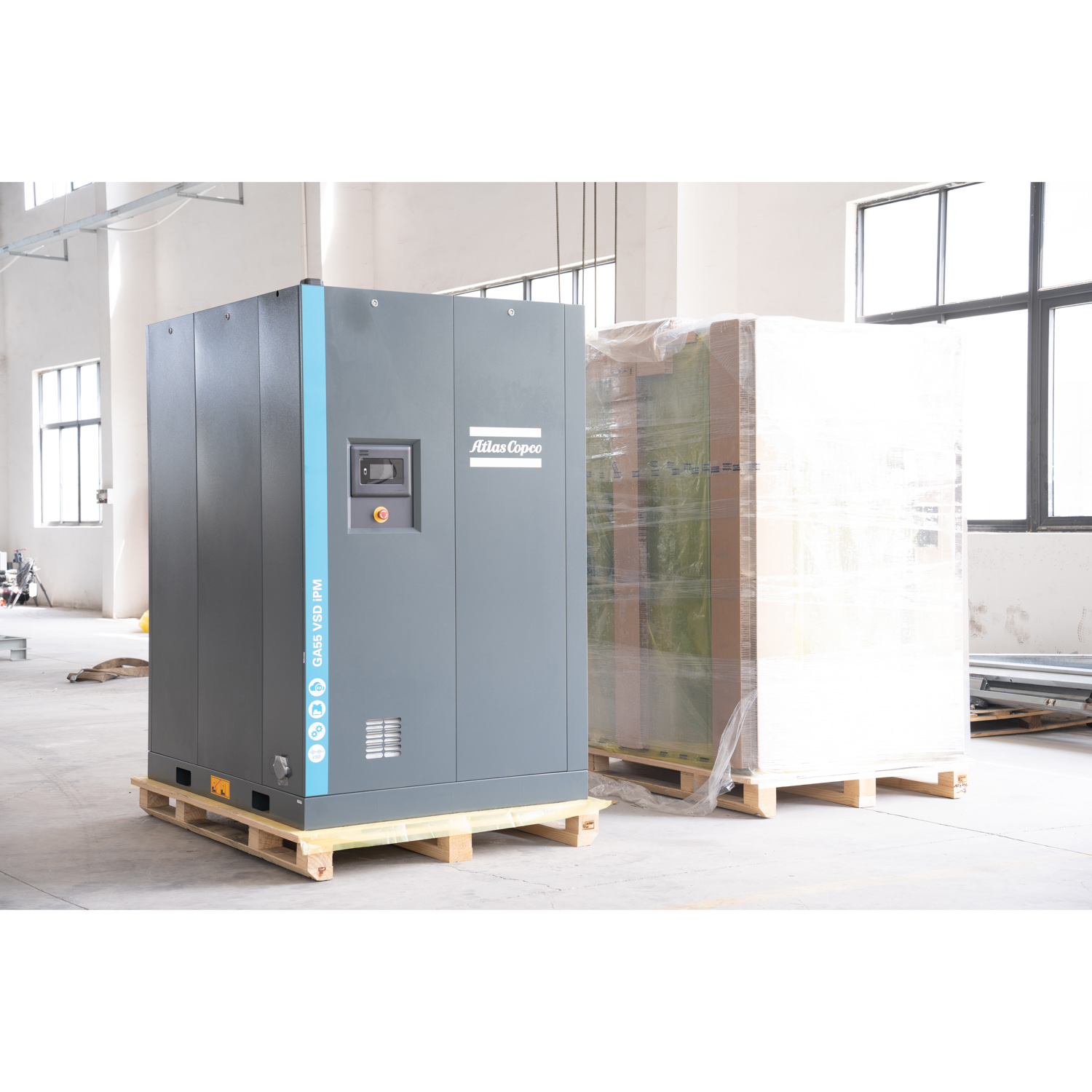
The nitrogen generator uses an internal or external air compressor to draw in ambient air (primarily composed of approximately 78% nitrogen, 21% oxygen, and 1% rare gases, carbon dioxide, water vapor, etc.) and compress it.
2. Purpose of Compression:
· Increase air pressure: Provides necessary energy for subsequent purification and separation processes. The PSA separation process requires specific pressure (typically 7-10 barg) to enhance molecular sieve adsorption efficiency.
· Increase gas density: Compression increases the number of gas molecules per unit volume, effectively raising the “feedstock” concentration and improving separation efficiency.
Output of this stage: High-temperature, high-pressure compressed air containing oil, water, and dust.
II. Purifying Compressed Air
Compressed air exiting the compressor is highly “contaminated” and cannot be directly fed into precision carbon molecular sieves for separation, as this would rapidly cause failure. Therefore, rigorous purification and drying treatment is essential.
1. Air Buffer Tank:
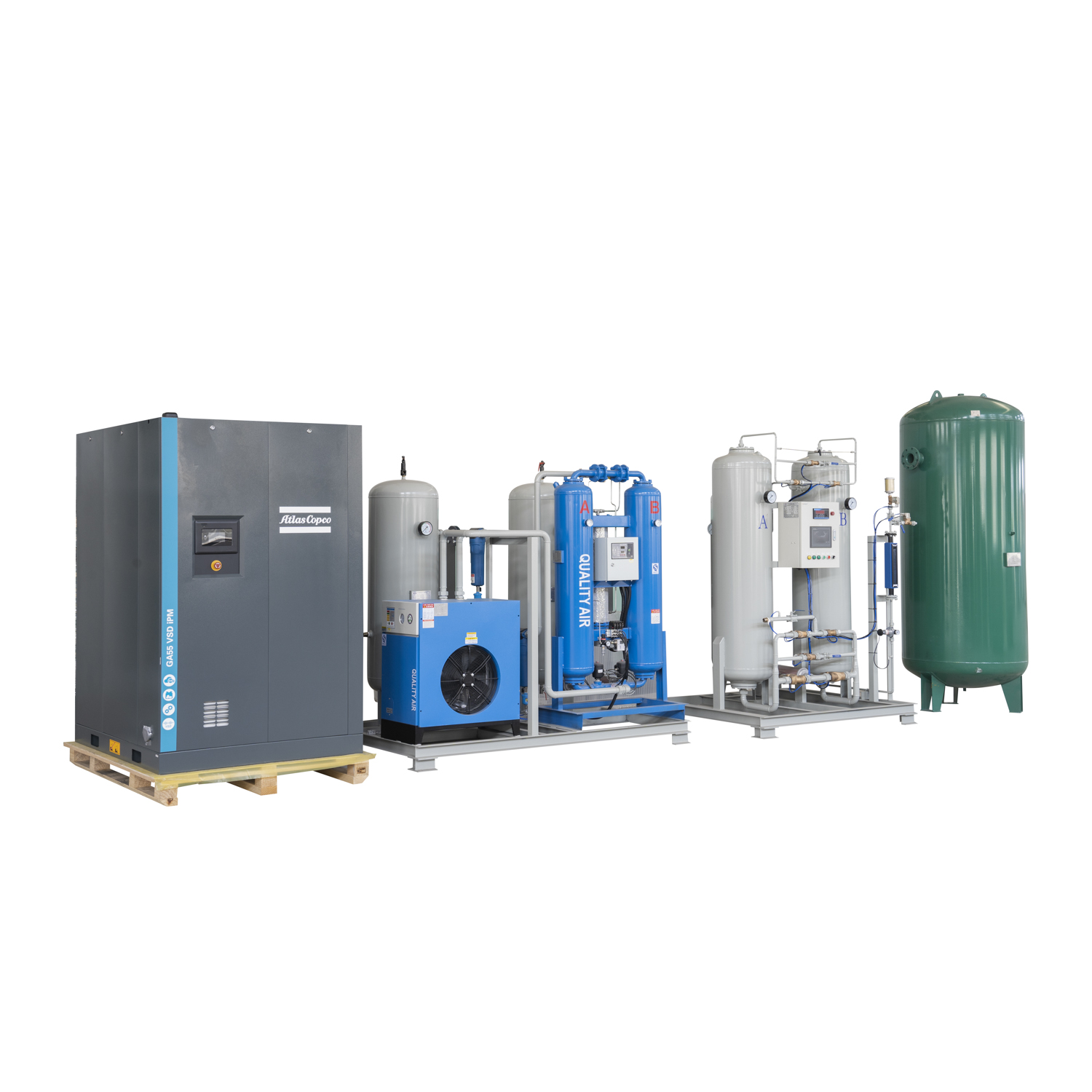
Compressed air first enters the air receiver tank. Its primary functions are to buffer pressure fluctuations, provide preliminary cooling, and allow sedimentation separation of some liquid water and oil.
2. Refrigerated Dryer:
Air enters the refrigerated dryer, where it is cooled to near freezing temperatures (typically 2-10°C). At this point, most water vapor and some oil vapor in the air condense into liquid water, which is then automatically drained.
3. Precision Filtration System (Critical Step):
The preliminarily cooled and dried air sequentially passes through a precision filtration system:
· Oil-Water Separation Filter: Removes large solid particles (e.g., rust, dust) and liquid water.
· Main Line Filter: Removes larger solid particles (e.g., rust, dust) and liquid water.
· Activated Carbon Oil Removal Filter: Utilizes activated carbon's strong adsorption capacity to deeply remove trace oil vapors and oil aerosols from compressed air. This is a critical step for protecting the carbon molecular sieve, as oil content permanently poisons it.
· Ultra-Fine Filter: Serves as the final safeguard, removing finer particles (typically down to 0.01μm) to ensure oil-free, dust-free air enters the adsorption tower.
Output at this stage: Clean, dry, pressure-stable compressed air, fully prepared for PSA separation.
4. Air Buffer Dryer Tank:
· Stabilizes system pressure to ensure consistent PSA operation
· Stores clean, dry air to balance supply and demand
· Further cools and separates residual moisture
· Protects precision filters, extending cartridge lifespan
III. PSA Oxygen-Nitrogen Separation
Clean compressed air first enters the air process tank, then flows through piping into the bottom of the pressure swing adsorption nitrogen generator filled with carbon molecular sieves. After diffusion through a specially designed airflow equalizing diffuser, the gas enters the adsorption tower uniformly for oxygen-nitrogen separation. Nitrogen is produced at the tower top and stored in the nitrogen process tank. A small portion of the produced nitrogen enters the regeneration tower to purge the carbon molecular sieve, stripping adsorbed impurities (primarily oxygen) to achieve regeneration. The two adsorption towers operate in alternating cycles, continuously feeding raw air and producing nitrogen.
Tower A: Adsorption, Tower B: Desorption Tower A: Desorption, Tower B: Adsorption
The nitrogen buffer tank equalizes the pressure and oxygen content of nitrogen separated from the oxygen-nitrogen separation system, ensuring continuous and stable nitrogen supply. Simultaneously, after the adsorption towers switch operations, it recirculates part of its gas back into the adsorption towers. This aids in pressurizing the towers while also protecting the bed layer, playing a critically important auxiliary role in the equipment's operation.
Through the precise coordination of these three steps, the PSA nitrogen generator efficiently and reliably separates nitrogen with a purity of 99.999% or higher from the air.

